
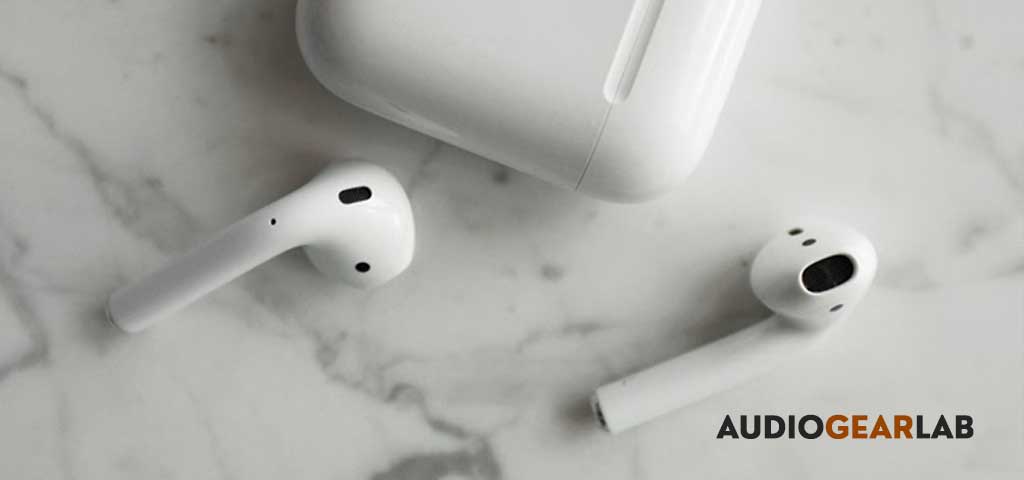
Open five "best wireless earbuds" lists and you will get five different winners. That is not because the reviewers are careless. It is because "best" depends on things a ranked list cannot know about you: how your ears are shaped, where you actually wear the things, and which two or three features you would actually use every day. The fastest way to choose wireless earbuds is to skip the scoreboard and decide five verifiable things first: fit format, where you'll wear them, the features you'll actually use, which ecosystem you're already in, and how to read a spec sheet without being fooled by it. None of that requires hearing a single pair, and it will get you further than a star rating will.
Why the "best of" lists disagree with each other
RTINGS, What Hi-Fi and SoundGuys all run real measurement labs, and their top picks still do not match. That is not a flaw in any of them. Each site weighs isolation, bass response and call quality differently, and none of them can weigh how a pair feels in your specific ear canal after two hours, because they have not met your ears.
That is the honest limit of any ranked list, including ours. We have not personally heard the products discussed on this site, so we are not going to hand you a fake number-one pick either. What we can do is verify everything that decides fit, feature match and spec literacy without a listening room, and that turns out to cover most of what actually goes wrong when someone buys the wrong pair.
The five things that actually decide it
1. Fit format: sealed or open
This is the single biggest fork in the entire category, bigger than brand or price. A sealed design (silicone ear tips, forming a physical seal in the canal) blocks outside noise before any noise cancellation even switches on, and it is a precondition for meaningful active noise cancellation (ANC) to work at all. An open design (no tip, resting in or around the ear) lets outside sound in on purpose, so you can hear traffic, a coworker, or your own kid, at the cost of isolation and low-end punch.
Neither is a compromise version of the other. They are built for different situations, and the article that walks through this exact fork using AirPods 4 and AirPods Pro 3 as the concrete example is AirPods 4 vs AirPods Pro 3: Open Fit or Sealed.
2. Where you will actually wear them
A pair chosen for a running trail and a pair chosen for open-plan office calls should not be the same pair. Running favors a stable, sweat-resistant fit and awareness of traffic. An office favors call clarity and a case that survives a bag. A commute favors isolation. Write down the one place you will wear these most before you compare a single spec.
3. The features you will actually use
Multipoint (staying connected to two devices at once), wear detection (auto-pausing when removed), transparency mode, and touch controls all sound good on a feature list. Most buyers use two or three of them regularly and never touch the rest. Circle the two or three that solve a problem you actually have, and treat everything else as a tiebreaker, not a requirement.
4. Which ecosystem you're already in
If you live in Apple's ecosystem, Apple's own features (automatic switching between your iPhone and Mac, Find My integration, Audio Sharing) work in a way a competing brand's earbuds simply cannot replicate on that hardware. The reverse is also true on Android. Before you shop, know which model you already own or are replacing, because "AirPods" alone is not specific enough. See Which AirPods Do You Actually Have? if you are not sure what is currently in the case on your desk.
5. Reading the spec sheet without being fooled by it
A box that lists "20Hz to 20,000Hz" is not telling you anything about sound quality by itself, and a "40mm driver" is not automatically better than a 10mm one. Manufacturers publish these numbers because buyers ask for them, not because the numbers alone predict how something sounds. Two dedicated breakdowns exist for this: What the Numbers on a Headphone Box Actually Tell You covers the whole spec sheet, and Frequency Response Range vs Frequency Response Graph covers the single most misread number on it.
What we will not pretend to tell you
We are not going to invent a sound-quality verdict, because we have not heard these products and a fabricated impression would be worse than no impression at all. For the part of the decision that genuinely requires ears and an instrumented rig, three independent, measurement-backed outlets do that work well: RTINGS, which publishes raw measurement data from its own lab; SoundGuys, which runs comparative lab testing; and What Hi-Fi, which has run controlled listening panels for decades. Use their measurement pages for the sound-quality question, and use the five checks above for everything else, which is most of the decision.
A short checklist before you open a product page
| Question | Why it matters |
|---|---|
| Sealed or open fit? | Decides isolation, ANC capability, and how they feel after two hours |
| Where will you wear them most? | Running, office, commute and travel each reward different things |
| Which two or three features do you actually use? | Everything else is a tiebreaker |
| What do you already own? | Ecosystem features only work inside their own ecosystem |
| Does the spec sheet number mean what you think? | A range or driver size alone does not predict sound quality |
Work through this table before you compare a single "best of" list, and the list stops being the decision and starts being a shortlist.
A quick worked example
Say you spend most of your day in an open-plan office, on calls half the morning, and you already own an iPhone and a Mac. Run the five checks: fit format leans sealed, because call clarity and some isolation from office chatter matter more here than room awareness. Environment confirms it, an office is exactly the case for a sealed fit in the table above. Features that matter are probably multipoint (switching between phone and laptop mid-call) and a case that survives a bag, not necessarily deep ANC. Ecosystem says Apple, since automatic device switching only works well inside Apple's own hardware. And the spec sheet becomes almost irrelevant at this point, because the decision was already made by the first four checks, not by comparing driver sizes between two products. That is the actual order these five things get used in, and it rarely starts with the spec sheet at all.
FAQ
Do I need active noise cancellation (ANC)?
Only if you spend real time somewhere loud and constant: a commute, an open office, or frequent flights. If you mostly listen at home or on a quiet walk, ANC is a nice-to-have, not a requirement, and it adds cost and often reduces battery life.
Is a bigger driver always better?
No. Driver size describes the diameter of the sound-producing component, not the quality of the sound it produces. A larger driver can move more air, which helps with bass, but tuning, build quality and fit all matter as much or more. See What the Numbers on a Headphone Box Actually Tell You for the full breakdown.
Should I buy the newest model or last year's?
It depends on what actually changed and whether you would use the new features. A generation-over-generation comparison, done honestly, looks at what changed on paper rather than assuming newer means better for you specifically.
Can I trust a "best wireless earbuds" ranking?
Trust it for the sound-quality part, since that genuinely requires a listening room or a measurement rig we do not have. Do not trust it to know your ear shape, your use case, or which features you will actually use. That part is yours to verify.
What if I've tried sealed earbuds before and hated them?
You are not alone, and it is a real, common reaction, not a sign you are doing it wrong. AirPods 4 vs AirPods Pro 3: Open Fit or Sealed covers exactly this fork and what an open-fit alternative gets you and costs you.